Madia
The Madia are an ancient Gond-affiliated tribe officially classified as a Particularly Vulnerable Tribal Group. Inhabiting Bijapur’s most remote forests, they remain among India’s least-assimilated communities, sustaining themselves through shifting cultivation, hunting, and forest gathering, while preserving an extraordinary oral, musical, and dance heritage.
Area Residing
Remote forested belts and hill slopes of Bijapur, especially the interior of the Indravati Tiger Reserve buffer zone; Awapalli, Usoor, and the Abujhmarh-adjacent stretches
Language
Madia / Dandami Madia — a Gondi-Dravidian language; minimal Hindi penetration in interior hamlets, Halbi used for inter-tribal contact
Rituals
Bison-horn dance at marriages and Madai; clan-based exogamy strictly observed; offerings of mahua liquor and rice to forest deities (Anga Pen); ancestor worship through stone memory pillars etched with the deceased’s life motifs (sometimes wild-buffalo heads, occasionally helicopters or modern symbols); ritual community hunts before major festivals
Festivals Celebrated
Mahua Pandum, Beej Tyohar, Nawakhani, Madai fairs, agricultural new-year rites at Akti; weddings and community hunts as major collective events
Unique Characteristics
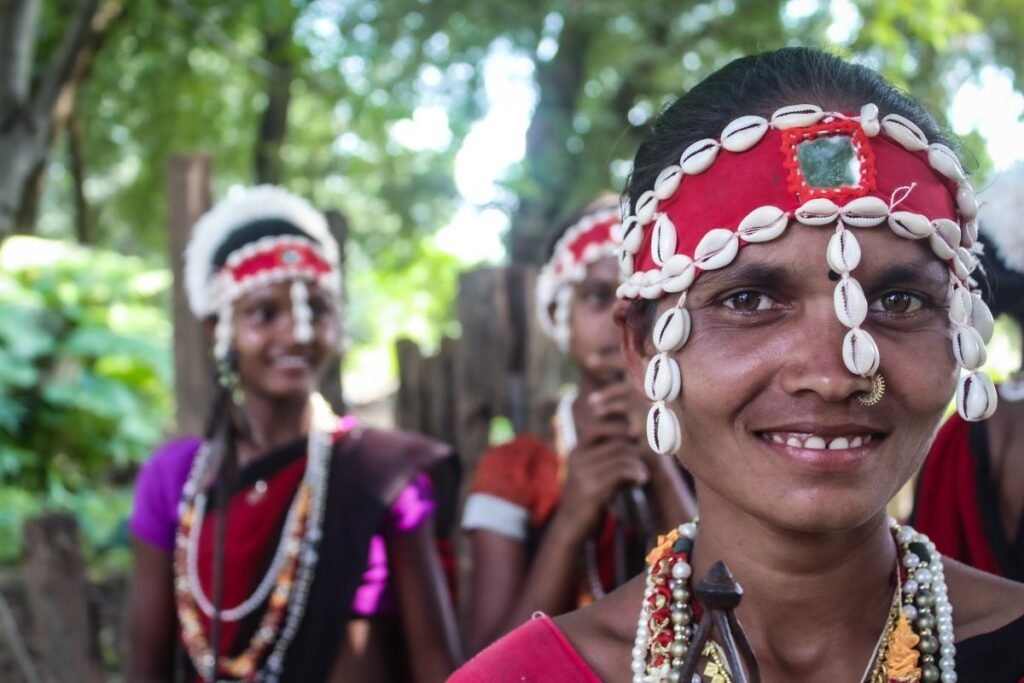
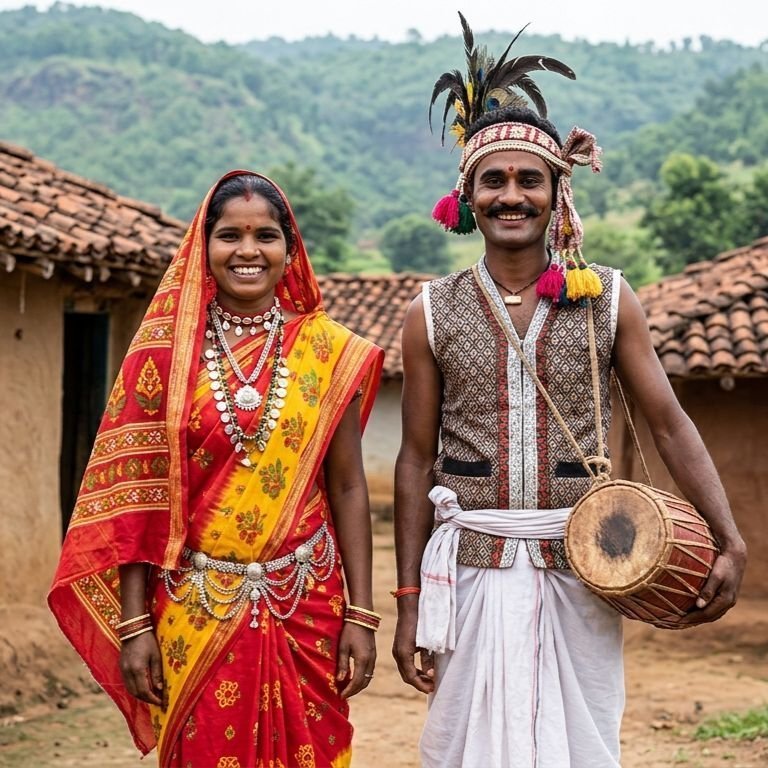
One of India’s officially designated Particularly Vulnerable Tribal Groups (PVTGs); the Bison-horn Maria are world-famous for ceremonial dancers wearing massive bison-horn headdresses adorned with cowrie shells and peacock feathers; shifting cultivation, hunting, and forest-gathering livelihoods; deep oral epic traditions