Festivals of Bijapur
Akti (Akshaya Tritiya)
Worship of the village earth-mother (Dharti Mata); ceremonial planting of the season’s first seeds; also marks the traditional bride-search and marriage-fixing season in tribal communities
Beej Tyohar (Beej Pandum)
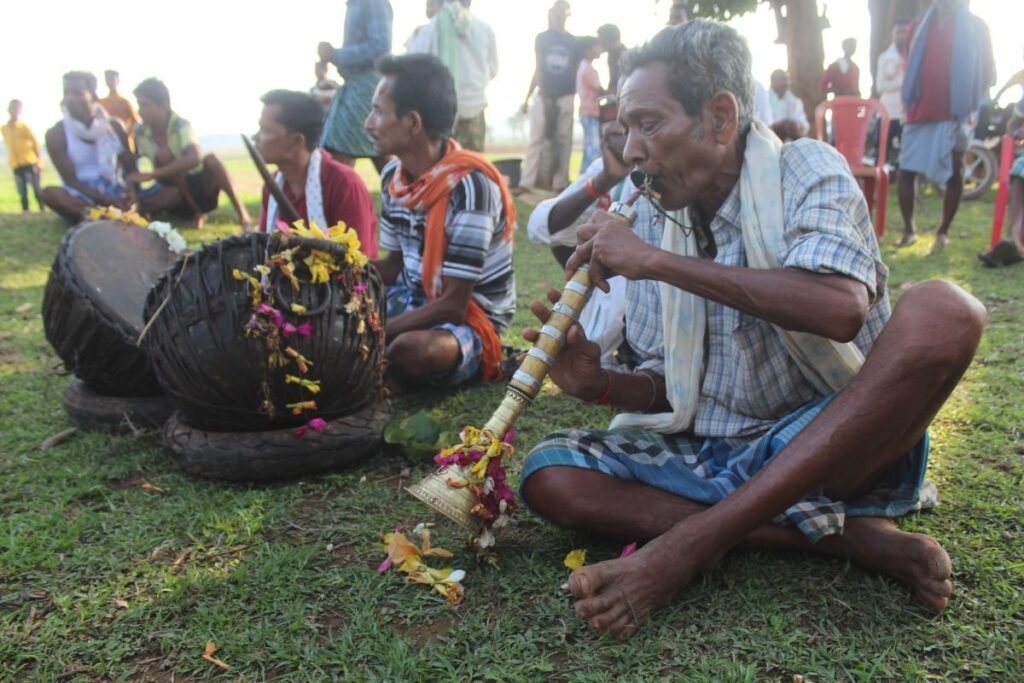
Pre-monsoon community fishing along the Indravati and tributaries — entire villages cast traditional nets in unison and share the catch communally; Bada Dhol Nacha performances follow the seed-blessing rites
Bhadrakali Mela
Cross-state pilgrimage drawing devotees from Chhattisgarh, Telangana, and Maharashtra; mystical natural-cave setting in dense forest; folk music, regional food stalls, and tribal participation
Chherchhera
Children move house-to-house chanting “Chher Chhera, kothi ke dhan la haar dera!” (“open your granary and share the grain”); households gladly distribute freshly harvested rice — a community-binding ritual of generosity
Community Fishing Festival
Entire villages descend on the river together with traditional handmade nets; the catch is divided communally rather than kept individually, reinforcing the deep tribal-riverine bond with the Indravati
Diyari (Tribal Diwali)
Distinctive tribal version of Diwali blending lamp-lighting with gaura-gauri rituals; offerings of rice and mahua liquor to clan deities; drum beats and folk songs continue through the night until dawn
Goncha Festival
Devotees fire bamboo “tupki” guns loaded with peng (a local fruit) at the Lord’s chariot in a playful, symbolic exchange — one of the most distinctive religious sights in all of India
Gudi Padwa Rath Yatra (Poshanpalli)
Two beautifully crafted wooden chariots are pulled in a grand procession, first circling the Krishna Temple and then proceeding to the Sakalnarayan Cave; rare blend of Maharashtrian-Telugu New Year customs with Bastar tribal devotion
Hareli
Neem leaves tied over doorways and cattle sheds for protection; traditional gedi (bamboo stilt) races and games for children; Bada Dhol Nacha in the village square at dusk
Karma (Karam)
A Karam branch is ceremonially planted in the village centre; young men and women in traditional attire perform the Karma dance around it through the night to mandar drum beats; serves as a community courtship and youth festival
Kodai Mata Mela
The sacred umbrella of Kodai Mata is paraded through the village, accompanied by rhythmic drumbeats; shamans believed to be possessed by deities gather in sacred assembly and perform a holy dance from evening to midnight, culminating in a grand congregation on the third day
Madai
Deities of neighbouring villages are carried in palanquins to the host village; multi-day fair with tribal markets, folk dances, weapon displays, food stalls, spirit-possession rituals; one of the most distinctive Bastar traditions