Muria
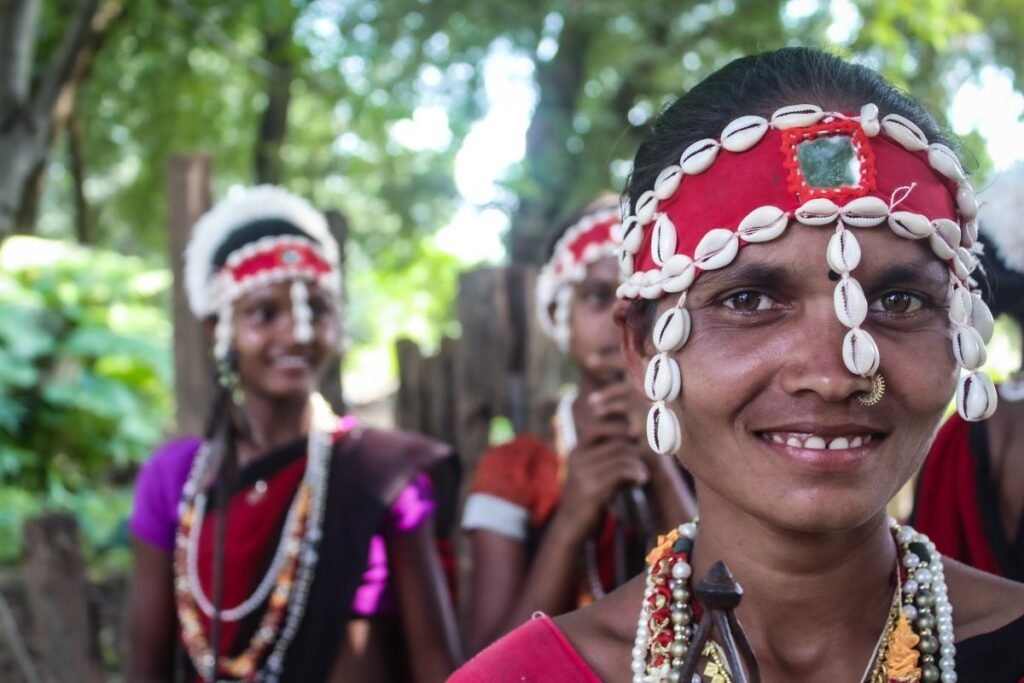
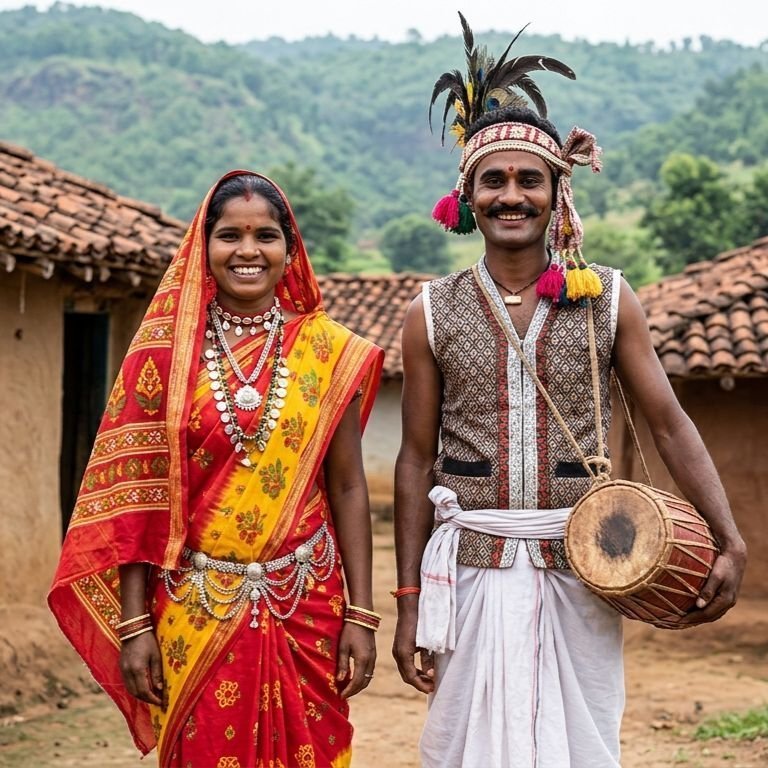
The Muria are the largest indigenous community of Bijapur, a Gond-affiliated tribe of southern Bastar known for settled cultivation, vibrant material culture, and the ancient Ghotul youth-dormitory institution. Centuries of close ties with the Indravati’s forested landscapes have shaped their music, social organisation, and worldview.
Area Residing
Predominantly the Bhopalpatnam, Bijapur, and Bhairamgarh blocks; villages along the Indravati River and forested interiors
Language
Muria / Koitur — a Dravidian Gondi-family language; many speakers also use Halbi as a regional lingua franca and increasingly Hindi/Chhattisgarhi
Rituals
Worship of clan deities (Pen) and the village mother goddess (Mata Mauli); first-grain offering before any household tastes new rice at Nawakhani; pre-sowing seed-blessing at Beej Tyohar; spirit-mediumship by Sirha (shaman) at Kodai Mata Mela; ancestor remembrance through painted memory pillars topped with wild buffalo or contemporary motifs
Festivals Celebrated
Mahua Pandum (March–April), Beej Tyohar / Beej Pandum (May–June, with community fishing on the Indravati), Nawakhani (August–September), Kodai Mata Mela at Jaitaloor (December–January), Phagun Madai (March), Bada Dhol Nacha performances during all major festivals
Unique Characteristics
Numerically the most prominent tribe in Bijapur; renowned for the Ghotul youth-dormitory institution where adolescents learn social, artistic, and life skills; vibrant material culture of beadwork, peacock-feather headgear, and Bada Dhol drums; traditionally settled cultivators with strong forest-economy ties (mahua, tendu, bamboo)